
Exness Minimum Deposit: Requirements and Options
Open your Exness trading account in Tanzania with just $10 minimum deposit. Multiple payment methods including M-Pesa available.
 Start trading with the right deposit amount:
- Open an Exness trading account step by step
- Exness account types and requirements
- Deposit methods and payment options
- Best forex trading platforms for beginners
- Forex trading basics explained
- Open a demo trading account before going live
Minimum deposit on Exness: what Tanzanian traders actually deal with
For traders in Tanzania, the entry point on Exness is relatively low compared to many international platforms. In most cases, you can start with around $10, which in practice makes it possible to test real trading conditions without committing large funds upfront.
That said, the exact requirement depends on the account type. While some accounts are accessible with a small balance, others — especially those designed for tighter spreads — require a higher starting amount. This difference matters more than it seems: it directly affects trading costs and execution conditions.
If you deposit in Tanzanian shillings (TZS), the platform converts it into USD automatically. The rate is updated in real time, so the final amount may shift slightly between initiation and confirmation. For active traders, even small conversion differences can add up over time.
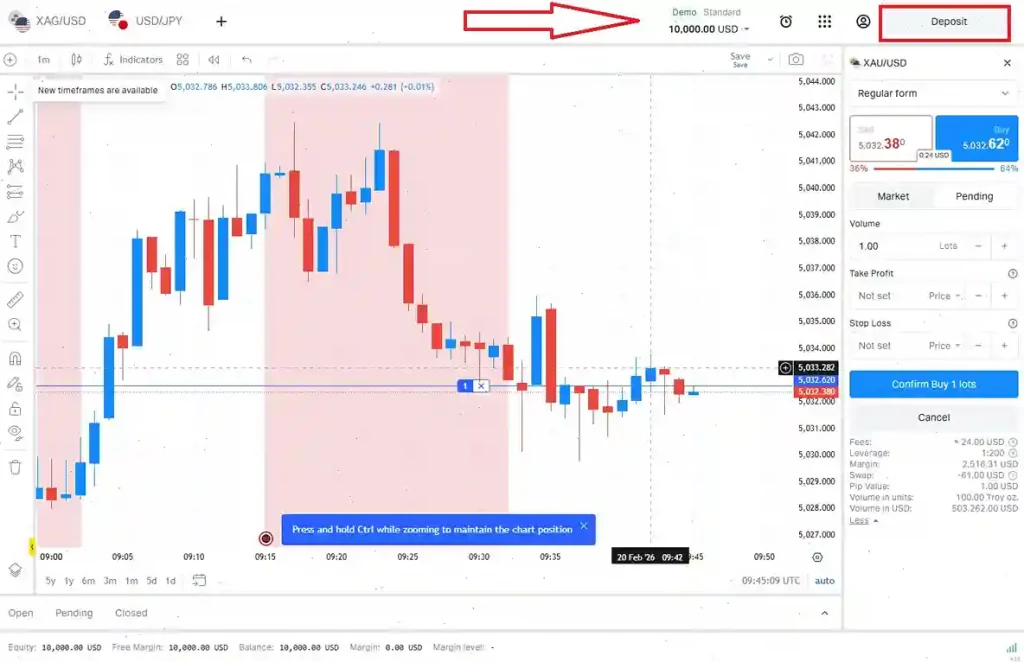
Before any deposit goes through, identity verification is required. Most users in Tanzania report that this step takes about a day if documents are uploaded correctly. Once verified, deposits via digital methods are usually processed almost instantly.
| Account Type | Minimum Deposit | Spread Model | Leverage |
|---|---|---|---|
| Standard | $10 | From ~0.3 pips | Up to 1:2000 |
| Pro | $200 | From ~0.1 pips | Up to 1:2000 |
| Raw Spread | $200 | From 0 pips + commission | Up to 1:2000 |
How traders in Tanzania usually fund their accounts
Payment habits in Tanzania lean heavily toward mobile solutions, and the platform reflects that. Services like M-Pesa, Airtel Money, and Tigo Pesa are commonly used because they’re quick and don’t require a bank account.
In practice, mobile money deposits often appear within a few minutes. That’s useful if you’re reacting to market movement — waiting a day for a bank transfer simply isn’t practical in fast markets.
Bank transfers are still used, especially for larger amounts. Local banks such as CRDB or NMB typically process transactions within 1–3 working days. International wires can take longer, sometimes up to five days, depending on intermediary banks.
Cards (Visa and Mastercard) are another option. They’re straightforward and usually instant, but some users notice occasional declines depending on bank restrictions or currency settings.
Mobile money: the most common route
With M-Pesa, the process is simple — enter your number, confirm on your phone, and the funds move almost immediately. Airtel Money and Tigo Pesa work in a similar way.
Fees come from the mobile provider, not the trading platform. This is worth checking beforehand, especially for frequent deposits.
E-wallets and crypto
Some traders prefer Skrill or Neteller for faster cross-border transfers. These typically settle within 10–15 minutes.
Crypto deposits (Bitcoin or USDT) are also available. They usually take 30–60 minutes depending on network confirmations. The minimum is roughly equivalent to $10, but the final credited amount depends on blockchain fees and volatility at the time.
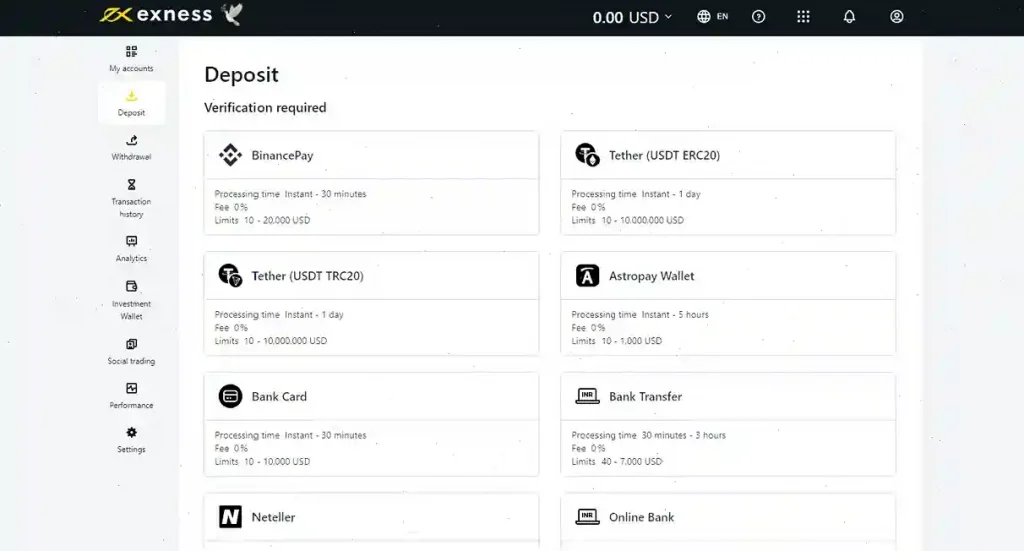
What the deposit process looks like step by step
After logging into your account dashboard, you’ll find the deposit section in the main menu. The flow is straightforward, but small details can affect how quickly funds arrive.
Typical process:
- Choose a payment method available in Tanzania
- Enter the amount (in USD or TZS)
- Confirm the transaction through your payment provider
For mobile payments, confirmation happens on your phone. For bank transfers, you’ll need to use the provided reference details — missing that step can delay processing.
Most digital payments show up instantly. If they don’t, it’s usually due to provider-side delays rather than the platform itself.
How confirmations work
Once a deposit is successful, you’ll receive a notification with transaction details. Many traders rely on this to track timing, especially when funding accounts before volatile sessions.
If something fails, refunds are typically automatic, though timing depends on the payment method. Mobile money reversals are often quicker than card refunds.
Account differences that actually affect your deposit choice
Not all accounts behave the same once funded. The minimum deposit is just one part — spreads and commissions matter more over time.
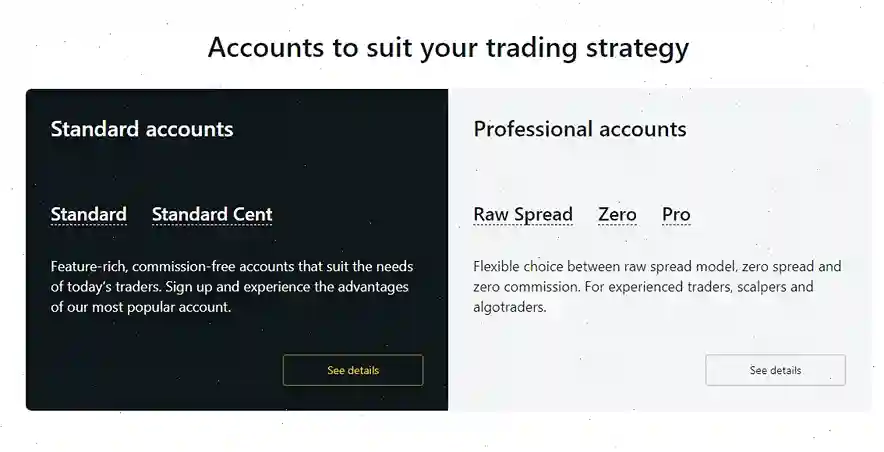
- Standard account: simpler structure, no commission, spreads from around 0.3 pips
- Pro account: tighter spreads, better execution — noticeable during high volatility
- Raw Spread account: near-zero spreads, but a commission (~$3.5 per lot) applies
In practice, beginners often start with Standard because costs are easier to predict. More experienced traders sometimes switch to Raw Spread accounts, especially if they trade frequently — lower spreads can offset the commission.
Choosing based on trading style
If trades are occasional and small, the difference between spreads is less noticeable. But for active trading — especially scalping — even a 0.2 pip difference can impact overall results.
It’s worth thinking about volume, not just deposit size.
| Feature | Standard | Pro | Raw Spread |
|---|---|---|---|
| Entry Deposit | $10 | $200 | $200 |
| Typical Spread | From 0.3 pips | From 0.1 pips | From 0 pips |
| Commission | No | No | Yes (~$3.5/lot) |
| Execution | Standard | Faster | Fastest |
Deposit limits and what affects them
Limits depend on both verification level and payment method. This is tied to financial regulations in Tanzania and anti-money laundering requirements.
Typical ranges:
- Mobile money: up to ~$500 per transaction
- Cards: often capped around $3,000
- Bank transfers: can reach $10,000 or more
Monthly limits also apply. With basic verification, many users operate within a $10,000 monthly range. Higher limits require additional documents.
Why verification matters
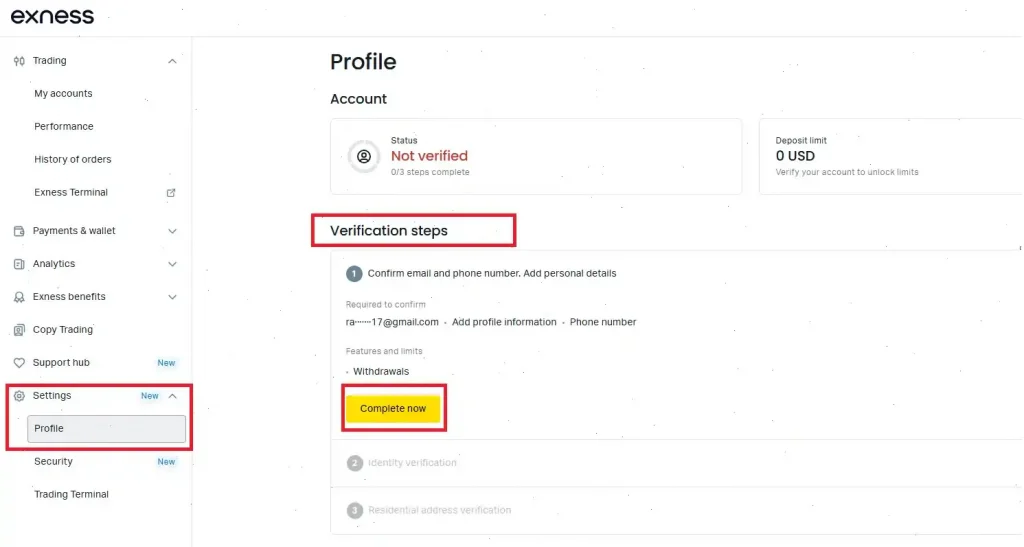
Basic verification (ID + address) is usually enough to get started. Enhanced verification may take a couple of days but increases flexibility significantly.
For traders moving larger amounts, skipping this step often leads to delays later.
Currency conversion: small detail, real impact
Deposits in TZS are converted into USD automatically. Rates update constantly, so the final credited amount might differ slightly from what you expected a few seconds earlier.
For occasional deposits, this isn’t a big issue. But frequent traders often notice the cumulative effect of repeated conversions.
Some prefer USD accounts to avoid this entirely. Others stick with TZS for convenience, especially if their income is in local currency.
A few practical points:
- Rates refresh every few seconds
- The final rate is shown before confirmation
- Conversion adds a small hidden cost over time
Managing this in practice
If you deposit and withdraw often, using one consistent currency can reduce friction. Mixing currencies tends to introduce extra costs that aren’t always obvious at first.
Security during deposits
Security is handled through standard industry measures: encrypted connections, account verification, and transaction monitoring.
For example:
- SSL encryption protects data during transfers
- Two-factor authentication reduces account access risks
- Automated systems flag unusual activity
In real use, most traders only notice these systems when something looks unusual — like logging in from a new device or location.
| Security Layer | How it works | Why it matters |
|---|---|---|
| Encryption | Secures data in transit | Prevents interception |
| 2FA | Extra login step | Protects account access |
| Monitoring | Tracks transactions | Detects suspicious activity |
| Device checks | Recognizes login patterns | Flags unusual behavior |
Support if something goes wrong
If a deposit doesn’t go through as expected, support is available around the clock. Response speed varies — simple issues are often resolved within minutes, while more complex cases (like bank delays) can take longer.
Swahili-speaking support can be useful for local payment issues, especially with mobile money services.
Common situations include:
- delayed mobile confirmations
- card payment declines
- mismatched currency amounts
In most cases, the issue isn’t the platform itself but the payment provider. Still, having direct support helps speed things up.
Escalation cases
Larger transactions or verification-related problems may be reviewed manually. This can slow things down, but it’s part of compliance requirements.
 FAQ
FAQ
What is the minimum deposit on Exness in Tanzania?
It usually starts from $10 for Standard accounts, while some advanced account types require around $200.
Which payment methods are commonly used in Tanzania?
Mobile money services like M-Pesa, Airtel Money, and Tigo Pesa are the most widely used, followed by bank transfers and cards.
How fast are deposits processed?
Mobile money and cards are typically instant. Bank transfers may take a few days depending on the bank.
Are there limits on deposits?
Yes, limits depend on verification level and payment method. Mobile payments usually have lower caps than bank transfers.
Is it safe to deposit funds?
Standard security measures like encryption and account verification are used, though users should still follow basic safety practices.