
Exness Islamic Account: Swap-Free Trading Conditions
Start halal trading with Exness Islamic Account in Tanzania. No swap fees, instant execution, 200+ instruments. Open your account today.
💡 Discover swap-free trading options:
- Exness account types comparison
- Exness VIP account trading conditions
- Exness leverage rules explained
- Open an Exness account for trading
- Benefits of forex trading explained
Exness Islamic Account in Tanzania: What Changes for Swap-Free Trading
For traders in Tanzania who want to avoid riba, the main difference is simple: an Islamic account removes overnight swap charges on eligible positions. That matters more than it may seem at first. On a regular CFD account, holding trades for several days can quietly add extra cost. On a swap-free account, that part is removed, so the cost structure becomes easier to track.
Exness offers this format for traders who need Sharia-sensitive conditions, but it is still a leveraged trading account, not a risk-free alternative. The absence of swap does not remove spread costs, possible commissions on some account types, or the effect of volatility. In practice, that means a trader can stay aligned with religious principles and still face the same market pressure as everyone else.
For users in Tanzania, this setup is often more practical on mobile than on desktop. A lot of trading activity happens through smartphones and mobile internet, especially when traders are checking positions during the day rather than sitting at a PC for long sessions.
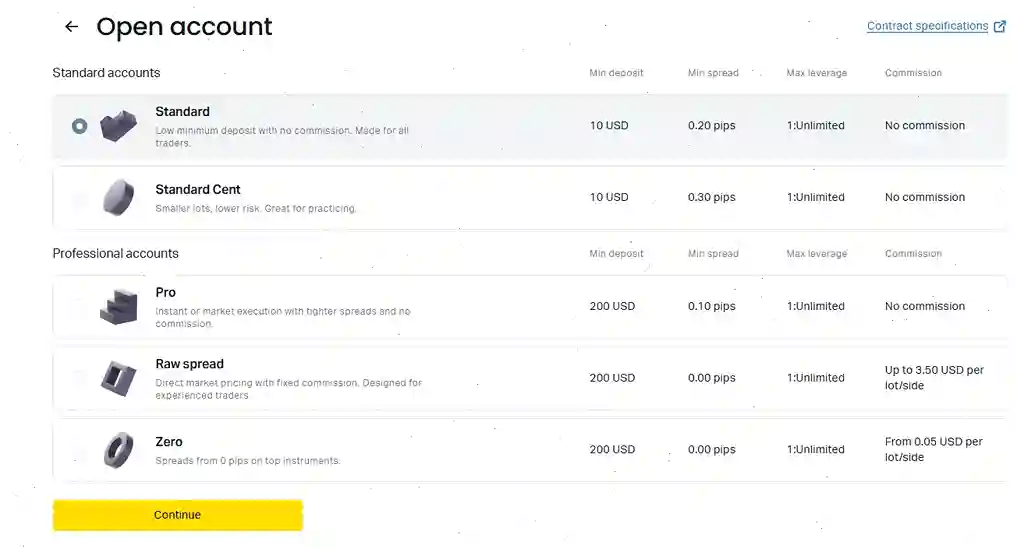
| Account Type | Minimum Deposit | Spread | Leverage | Swap Fees |
|---|---|---|---|---|
| Islamic Standard | $10 | From 0.3 pips | Up to 1:2000 | None |
| Islamic Pro | $200 | From 0.1 pips | Up to 1:2000 | None |
| Islamic Raw Spread | $200 | From 0.0 pips | Up to 1:2000 | None |
For most traders, the real choice is not just about the minimum deposit. It usually comes down to trading style. A Standard account keeps entry simple, while Pro and Raw Spread accounts make more sense for people who trade more often and care about tighter pricing.
How Swap-Free Status Works in Practice
The swap-free feature is designed to remove overnight interest, but traders should still pay attention to the account conditions shown in the Personal Area. Exness notes that when an account is registered from an Islamic country, swap-free status is usually assigned automatically. In other regions, availability can depend on account behavior and internal conditions.
If your account is registered from an Islamic country, swap-free status is assigned automatically to all trading accounts in your Personal Area. For other regions, swap-free status may be available, but qualification is determined by your trading activity. By default, all accounts are swap-free, but this can change based on your trading behavior. You can check your swap-free status in your Personal Area under Settings > Trading Conditions.
That point is easy to overlook. Many new traders assume “swap-free” means the status can never change, but brokers usually reserve the right to review accounts if trading behavior looks inconsistent with the intended use of the feature. So yes, the account may fit Islamic trading needs, but it still comes with platform rules and monitoring.
- Overnight swap is removed on eligible instruments
- Trading costs may still include spreads or account-specific commissions
- Account conditions should be checked regularly inside the client area
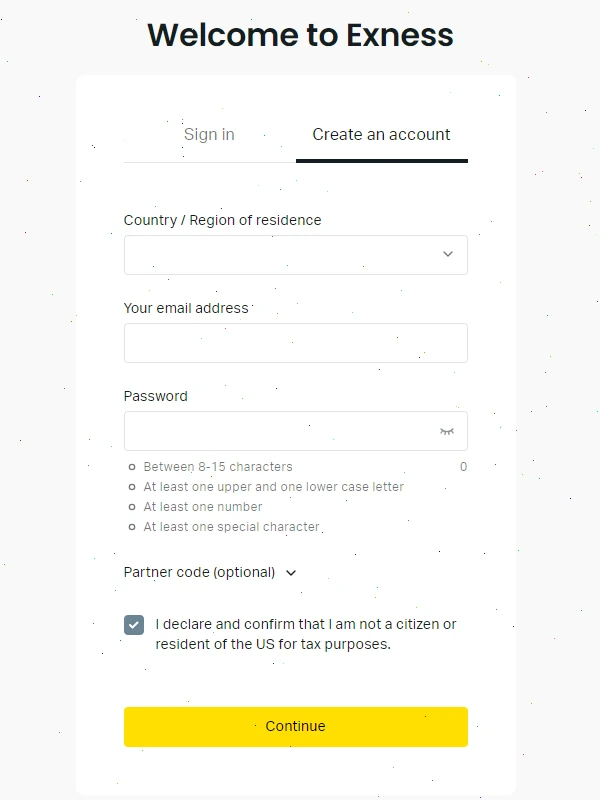
Opening the Account from Tanzania
The registration flow itself is online and fairly standard, though document accuracy matters more than speed. The name on the profile should match the ID exactly. Even a small mismatch can slow verification down.
For Tanzanian traders, the usual process looks like this:
- Choose Tanzania as the country of residence
- Register with an active email address and create a secure password
- Confirm a local phone number by SMS
- Upload an ID document and proof of address issued within the last three months
Vodacom, Airtel, and Tigo numbers generally work for SMS confirmation, which makes the process familiar for local users. Approval often happens within one business day, although blurry photos or mismatched address details can stretch that timeline.
Funding an Exness Islamic Account in Tanzania
Payment habits in Tanzania are different from what you see in some European markets. Mobile money is often the default option, not a backup. That matters because traders usually care less about fancy payment variety and more about whether deposits are fast and familiar.
Exness supports several methods commonly used by Tanzanian clients, including M-Pesa, Airtel Money, and Tigo Pesa. For smaller balances, that tends to be the most practical route. Bank transfers are still available through institutions such as CRDB, NMB, and Stanbic, but they are more likely to be used for larger transfers because they can take one to three business days.
- Minimum deposit starts from $10
- Mobile money transfers are usually the quickest local option
- Bank cards and e-wallets are useful for users who already fund accounts in USD
There is also automatic conversion where applicable, which helps Tanzanian users who deposit in local currency. Even so, the credited amount can differ slightly because exchange rates move and conversion is processed at the current rate.
Platforms: MT4, MT5, and Web Access
Islamic accounts can be used with MetaTrader 4, MetaTrader 5, and the Exness web terminal. The platform choice sounds like a technical detail, but it changes the trading experience quite a bit.
MT4 is still the comfortable option for many retail traders because it is lighter and familiar. MT5 offers more built-in functionality and a broader set of tools. The web terminal is useful when traders need quick access without installing software, which is handy if most of the activity happens from shared devices or on the move.
| Platform | Device | Features | Islamic Compatible |
|---|---|---|---|
| MetaTrader 4 | Desktop/Mobile/Web | Full functionality | Yes |
| MetaTrader 5 | Desktop/Mobile/Web | Advanced tools | Yes |
| Exness Terminal | Web-based | Simplified access | Yes |
Execution speed is listed around 0.178 seconds, which is fast enough for most retail scenarios. Still, speed becomes more noticeable during high-impact news events, when prices move quickly and even a well-placed order may fill a little differently than expected.
The platforms also include technical indicators, drawing tools, pending orders, and support for Expert Advisors. For traders who use automation, the important point is that the swap-free setup does not remove access to those features.
What You Can Trade on an Islamic Account
The available instrument range is broad enough for most retail strategies. Forex remains the core category, especially major pairs such as EUR/USD, GBP/USD, and USD/JPY, where liquidity is usually deeper and spreads tend to be tighter.
That said, Tanzanian traders do not use forex only. Gold often gets more attention during uncertain market periods, and crypto CFDs attract interest because they move around the clock. The catch is obvious: more movement can mean more opportunity, but also faster losses.
- Forex: major, minor, and selected exotic pairs
- Commodities: gold, silver, oil, natural gas, and some agricultural markets
- Indices: exposure to global stock benchmarks
- Stocks: CFDs on large international companies
- Crypto CFDs: Bitcoin, Ethereum, and other popular assets
Exness lists access to more than 200 instruments. That is enough variety for diversification, although beginners are usually better off focusing on a smaller watchlist instead of jumping between too many markets at once.
Costs, Leverage, and What Traders Often Miss
A swap-free structure solves one issue, not every issue. Trading still costs money. On some accounts the main cost sits in the spread, while on others it can be a combination of raw spread and commission. This is one reason why two traders using the same broker can end up with very different results.
Leverage up to 1:2000 is available on some account types. That looks attractive on paper, but it is also where many traders lose control of risk. High leverage reduces the margin needed to open positions, yet it also magnifies small market moves. A trade that feels manageable at first can turn sharply against the account in minutes.
Many traders notice this problem only after a few losing trades. The account still has swap-free status, the spreads still look acceptable, but the position size was too large from the start.
Risk Controls and Account Protection
Exness includes negative balance protection, which means losses should not exceed the funds deposited in the account. That is an important safeguard, especially for highly leveraged trading. Still, it should not be treated as a substitute for discipline.
There is also real-time margin monitoring, plus margin call and stop-out mechanisms. The stop-out level is commonly triggered around 20% margin, which can close positions automatically when equity falls too far. In practical terms, it is a last line of defense, not a strategy.
- Negative balance protection
- Margin monitoring and alerts
- Stop-loss, trailing stop, and take-profit tools
- Position size calculators for risk planning
A lot of traders try to keep risk per trade around 1% to 3% of account equity. That is not a platform rule, just a common risk management habit because it helps limit damage when markets become unpredictable.
Withdrawals: Speed Matters More Than Variety
Deposit methods get most of the attention, but withdrawal handling is what shapes long-term trust. For Tanzanian traders, mobile money is usually the most comfortable option because the funds return through a familiar channel and processing is relatively quick.
Bank transfers remain slower, often taking one to three business days. Cards can take even longer depending on the issuer. E-wallets and crypto withdrawals are usually faster, though users still need to account for external provider processing and, in the case of crypto, network conditions.
| Withdrawal Method | Processing Time | Minimum Amount | Fee |
|---|---|---|---|
| E-wallets | Within 1 hour | $10 | None above $50 |
| Mobile Money | 2-4 hours | $10 | None above $50 |
| Bank Transfer | 1-3 business days | $10 | None above $50 |
| Cryptocurrency | 30 minutes – 2 hours | $10 | None above $50 |
| Payment Cards | 3-5 business days | $10 | None above $50 |
Verification must be completed before withdrawals are processed. That can feel tedious for new users, but it is a standard requirement and one of the main reasons why accounts do not move money instantly on day one.
Support and Learning Resources
Customer support is available 24/7 through live chat, email, and other channels. For traders in Tanzania, English is the default working language, and Swahili support during regional hours can make routine issues easier to resolve.
The educational side is useful, but it should be viewed realistically. Webinars, tutorials, and market reviews can help new traders understand the platform and basic market behavior. They do not remove trading risk, and they do not guarantee better results. Still, they are useful for people trying to understand how Islamic trading conditions fit into day-to-day execution.
| Support Type | Availability | Response Time | Languages |
|---|---|---|---|
| Live Chat | 24/7 | Under 60 seconds | English, Swahili |
| 24/7 | Within 2 hours | Multiple | |
| Phone | Business hours | Immediate | English, Swahili |
For beginners, platform tutorials are usually the most practical place to start. More advanced traders tend to care less about generic lessons and more about execution, funding reliability, and whether support responds properly when there is a real issue.
❓ FAQ
What is an Exness Islamic Account in Tanzania?
It is a swap-free trading account intended for traders who want to avoid overnight interest charges in line with Islamic finance principles. It keeps the trading format active while removing swap on eligible positions.
Can traders in Tanzania open this account online?
Yes. Registration is completed online by creating a profile, confirming contact details, and submitting ID plus proof of address. Approval often takes up to one business day, although document quality can affect timing.
Does swap-free mean trading becomes cheaper in every case?
Not always. The overnight swap charge is removed, but spreads, commissions on certain account types, and normal market risks still remain. That is why swap-free does not automatically mean low-cost trading in every scenario.
Which payment methods are practical for Tanzanian users?
Mobile money is usually the most convenient option for everyday use, especially for smaller deposits and withdrawals. Bank transfers are more common for larger amounts, but they generally take longer to process.
Is high leverage a benefit or a risk?
It can be both. Higher leverage reduces the margin needed to open a trade, but it also increases exposure quickly. Many retail traders underestimate that part, especially when markets move fast.