
Exness Indicators: Best Tools for Forex Trading
Access comprehensive technical indicators on Exness platform in Tanzania for forex and CFD trading.
💡 Master technical indicators for trading:
- Exness trading strategies
- Advanced forex strategies
- AI trading tools
- Automated trading software
- Risk management techniques
Technical Indicators Overview on Our Platform
Our company offers an extensive suite of technical analysis tools via MetaTrader 4 and MetaTrader 5 platforms. We provide more than 80 built-in indicators that cover trend tracking, momentum evaluation, volume analysis, and oscillators. These tools support trading across forex pairs, commodities, indices, and CFDs, essential for Tanzania-based traders.
The indicator collection includes moving averages such as SMA, EMA, and WMA, plus RSI, MACD, Bollinger Bands, Stochastic, and Fibonacci retracements. Each tool is fully customizable with adjustable parameters, multiple timeframe support (from M1 to MN1), and diverse display formats. Our infrastructure ensures real-time data with millisecond accuracy for dependable analysis.
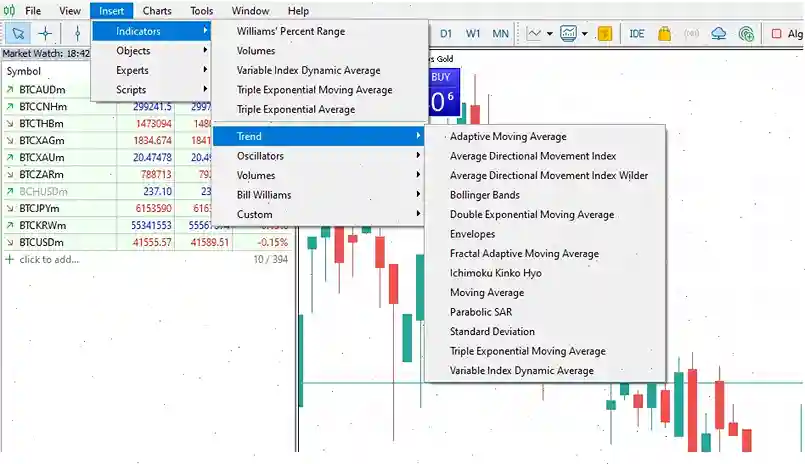
Traders can also implement custom indicators created using MQL4 and MQL5 languages. These can be installed directly on the MetaTrader platforms, or sourced from the MetaTrader Market. Additionally, Expert Advisors enable automated trading strategies based on indicator signals, streamlining execution.
| Indicator Category | Available Tools | Timeframes | Customization |
|---|---|---|---|
| Trend | MA, MACD, ADX, Parabolic SAR | M1-MN1 | Colors, periods, levels |
| Momentum | RSI, Stochastic, Williams %R | M1-MN1 | Overbought/oversold levels |
| Volume | OBV, Money Flow Index, Volume | M1-MN1 | Display styles, calculations |
Setting Up Indicators in MetaTrader Platforms
To add indicators on MT4 or MT5, open the Navigator panel and expand the Indicators folder. Right-click your chosen indicator and select “Attach to Chart” or drag it onto the price chart. This action opens the parameters window for customization.
- Adjust calculation periods and select price types like Close, Open, High, or Low.
- Modify visual settings such as line colors, thickness, and styles.
- Confirm settings by clicking OK to activate the indicator.
These steps enable traders in Tanzania to tailor indicators to their preferred analysis style efficiently.
MT4 Indicator Installation Process
Access the MQL4 directory via File → Open Data Folder in MT4. Place custom indicator files (.ex4 or .mq4) into the Indicators folder. Restart MT4 to refresh the Navigator list and access new indicators.
Compile source code indicators using MetaEditor by pressing F7 or clicking the Compile button. Successfully compiled indicators will display green checkmarks, confirming readiness for use.
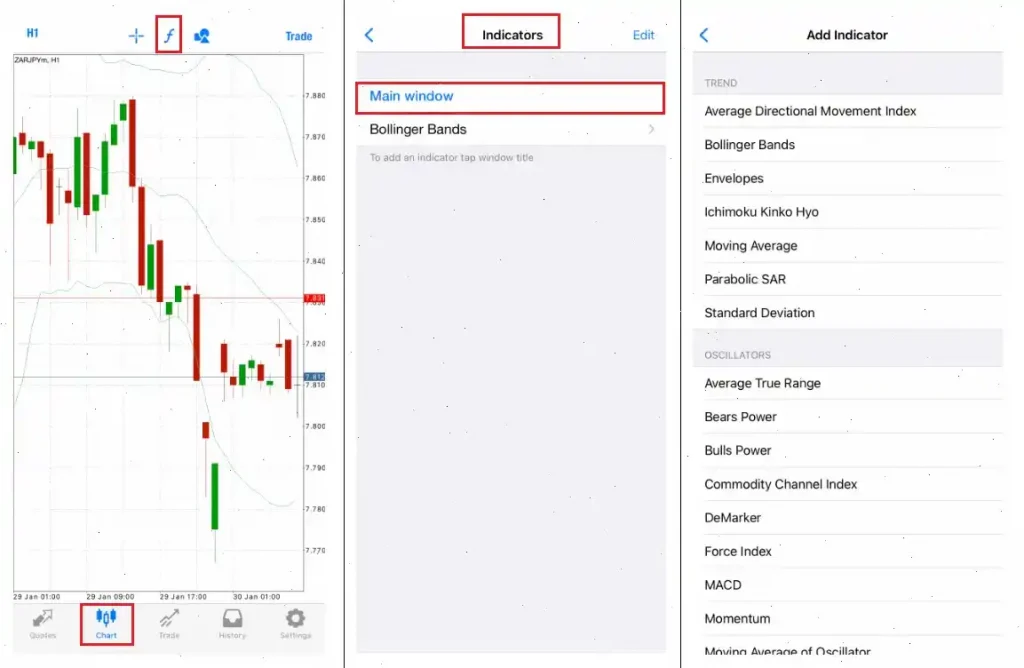
MT5 Advanced Indicator Features
MT5 offers multi-timeframe analysis by enabling the “Show data from all timeframes” option in indicator properties. This feature calculates indicator values across several periods simultaneously.
Use the Strategy Tester to backtest indicator-based strategies with historical data. Configure date ranges, timeframes, and optimization parameters for precise performance evaluation.
Popular Technical Indicators for Market Analysis
Moving averages such as SMA, EMA, and WMA help identify trends and support/resistance levels. Our platform supports periods ranging from 1 to 1000 for these indicators.
The Relative Strength Index (RSI) measures momentum, typically set to a 14-period calculation with overbought and oversold levels at 70 and 30, respectively. These settings can be adjusted to market volatility and preferred timeframes.
- RSI for momentum-based entry and exit signals
- Bollinger Bands to assess volatility and reversal points
- Stochastic oscillator for overbought and oversold conditions
- Fibonacci retracements marking potential support and resistance
- ADX measuring trend strength regardless of direction
Bollinger Bands combine a 20-period SMA middle band with upper and lower bands at ±2 standard deviations. Price touching outer bands may signal reversals, while band width reflects market volatility.
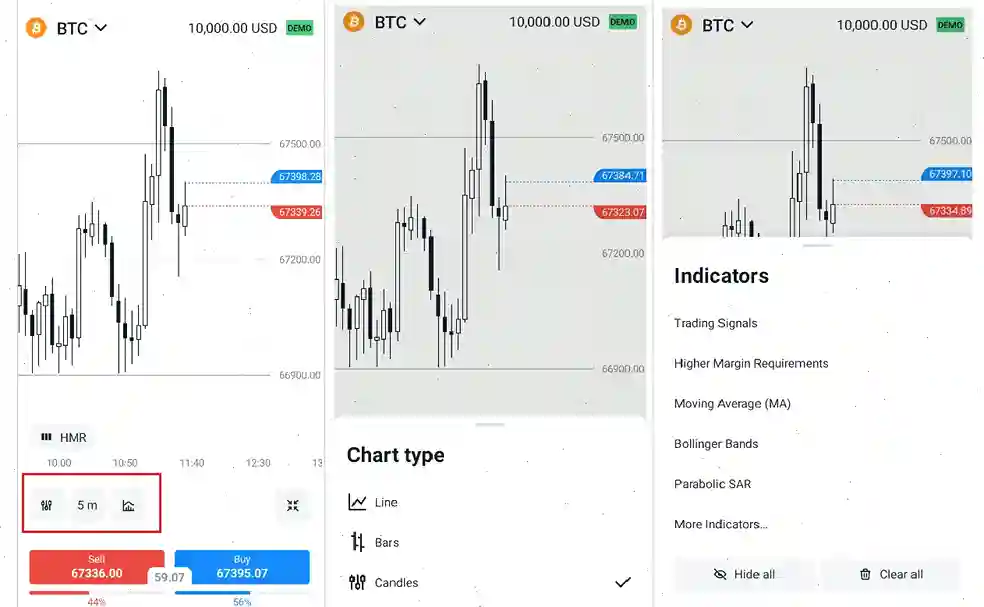
Custom Indicator Development and Installation
Our platforms allow creating custom indicators using MQL4 and MQL5 code editors. Access MetaEditor from the Tools menu to write and compile indicators with syntax highlighting and debugging tools.
Define input parameters, calculation routines, and output buffers for multi-line indicators. Test these using the Strategy Tester before deploying live.
- Use SetIndexStyle(), SetIndexBuffer(), and SetIndexLabel() to define appearance and data storage.
- Implement calculations in start() for MQL4 or OnCalculate() for MQL5.
- Access price data arrays like High[], Low[], Close[], and Open[].
- Call built-in functions such as iMA(), iRSI(), and iMACD() for complex formulas.
- Optimize code by limiting calculations to new bars and using global variables.
Real-Time Data Integration and Analysis
Our infrastructure delivers price feeds with latencies below 150 milliseconds, ensuring indicators update instantly with market movements. This guarantees timely recalculations and accurate entry or exit signals.
Indicators reflect current tick data while preserving historical stability. Traders can configure alerts via email, mobile push, or audio when indicators hit specified thresholds.
| Data Type | Update Frequency | Latency | Accuracy |
|---|---|---|---|
| Forex Quotes | Every tick | <100ms | 5 decimal places |
| CFD Prices | Real-time | <150ms | Variable precision |
| Market Depth | Level II | <50ms | Full order book |
Multi-Timeframe Analysis Capabilities
Traders can analyze instruments across multiple timeframes simultaneously using several chart windows. Indicators on each timeframe provide distinct insights into trend direction and momentum.
Correlating signals between timeframes enhances trade confirmation and reduces false signals. Higher timeframes show overall trend, while lower timeframes pinpoint precise entries.
Indicator-Based Trading Strategies
Combining different indicator types fosters systematic trading approaches with clear entry and exit rules. We recommend integrating trend, momentum, and volume indicators for balanced analysis.
Define strategy rules including indicator settings, signal thresholds, and risk parameters. Backtest strategies on historical data before live deployment to verify performance.
- Combine RSI with moving averages to follow trends
- Use MACD crossovers confirmed by Bollinger Bands
- Apply Fibonacci retracements alongside momentum oscillators
- Incorporate volume indicators with price action
- Use multiple timeframe confirmations to improve reliability
The trend-following method may involve entering long trades when a fast MA crosses above a slow MA and RSI is above 50. Exit positions upon momentum divergence or opposite crossovers.
Scalping Strategies with Fast Indicators
Scalping requires fast-reacting indicators with short periods on M1 and M5 charts. Traders monitor multiple currency pairs and set tight stop-losses based on recent volatility.
Alerts help identify rapid signals during active sessions for timely decision-making.
Advanced Indicator Analysis Tools
Beyond basic indicators, our platform provides tools like Depth of Market and Volume Profile. These show real-time order book data and price levels with high trading volume, aiding support and resistance analysis.
Market sentiment indicators aggregate trader positioning and open interest data, updated hourly. Combining sentiment with technical indicators offers a broader market perspective.
| Analysis Tool | Data Source | Update Frequency | Application |
|---|---|---|---|
| Volume Profile | Trade execution | Real-time | Support/Resistance |
| Market Sentiment | Trader positions | Hourly | Contrarian signals |
| Economic Calendar | News releases | Continuous | Fundamental analysis |
Plan trades around economic news, as major releases can temporarily disrupt indicator signals.
Correlation Analysis Between Indicators
Our platform calculates correlation coefficients between indicators to assess signal strength. Strong correlations confirm trends, while divergences indicate possible reversals.
The Correlation Matrix tool helps analyze relationships among instruments and indicators, useful for hedging and diversification strategies.
Mobile Trading with Technical Indicators
The Exness Trade mobile app offers full indicator functionality optimized for touch screens. It syncs indicator settings across devices for seamless switching between desktop and mobile.
Users can configure push notifications for indicator signals, ensuring timely alerts while on the move. Gesture controls allow zooming, panning, and quick parameter access on mobile charts.
Indicator calculations remain consistent across platforms, maintaining analytical accuracy and supporting continuous trading strategies.
| Feature | Mobile App | Desktop |
|---|---|---|
| Indicator Library | 80+ built-in, custom support | 80+ built-in, custom support |
| Alerts | Push, email, audio | Email, audio |
| Multi-Timeframe | Supported | Supported |
❓ FAQ
How do I add custom indicators on Exness MT4?
Open the MT4 data folder, place .ex4 or .mq4 files in the Indicators directory, then restart MT4. Use MetaEditor to compile source files if needed.
Can I use multiple timeframes for analysis?
Yes, MT5 supports multi-timeframe indicator display and multiple chart windows for simultaneous analysis.
What alert types are available for indicators?
Alerts include email notifications, mobile push alerts, and audio signals, configurable per indicator condition.