
Forex Demo Account: How to Start Trading Without Risk
Open your Exness demo account in Tanzania today. Practice forex and CFD trading with virtual funds, test strategies, and master our platform features.
💡 Practice trading safely before going live:
- Open a real Exness trading account
- Download MetaTrader 4 for forex trading
- Download MetaTrader 5 trading platform
- Trade online using Exness WebTerminal
- Learn forex trading strategies for beginners
Exness Demo Trading in Tanzania: How It Works in Practice
Trying out forex trading without putting money at risk is often the first step for many traders in Tanzania. A demo account with Exness gives access to a simulated environment that behaves almost like a live market. Prices update in real time, spreads fluctuate, and orders are executed with similar speed — usually within a second under normal conditions.
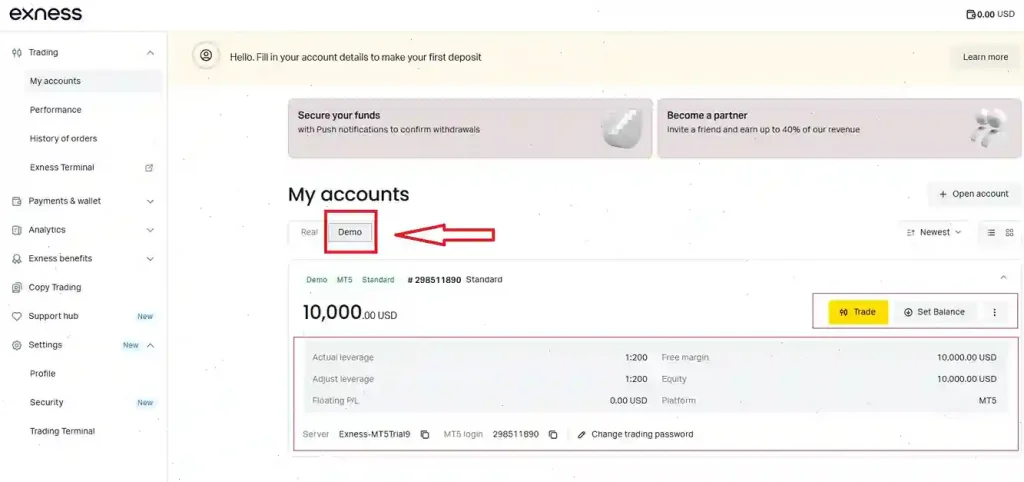
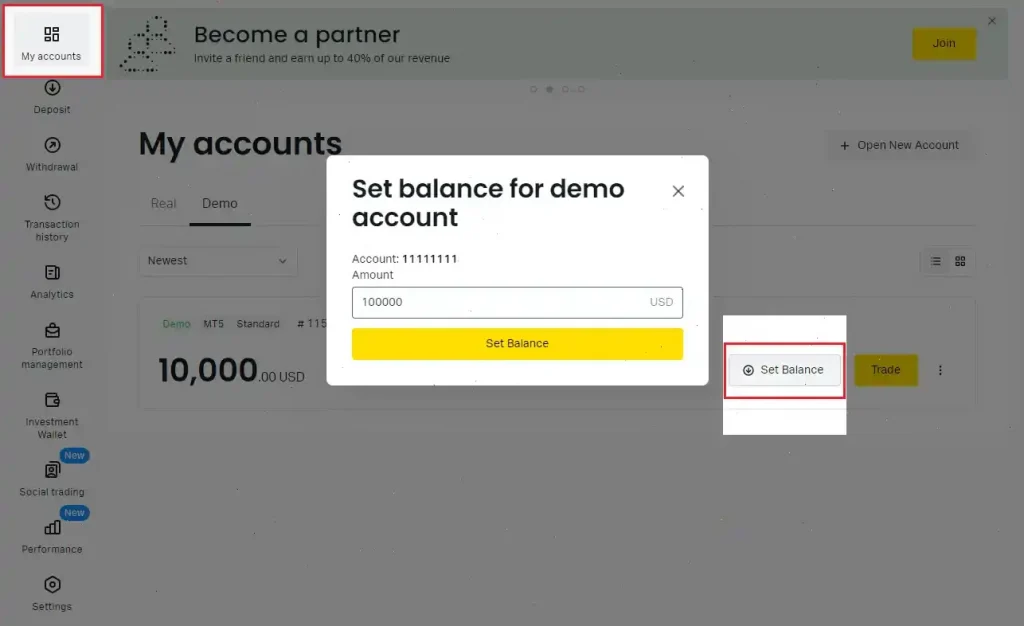
You can start with virtual funds ranging anywhere from $10,000 to $1,000,000. In reality, most traders don’t need such large balances, but having flexibility allows you to test both conservative and aggressive strategies. The same instruments available on live accounts are also present here, including forex pairs, commodities, indices, and crypto assets.
| Feature | Demo Mode | Live Trading |
|---|---|---|
| Balance | Virtual funds | Real money |
| Market Prices | Live quotes | Live quotes |
| Execution | Simulated (fast) | Real liquidity |
| Risk | None | Capital at risk |
| Access Duration | No fixed limit | Unlimited |
One thing many traders in Dar es Salaam and other cities notice: demo trading feels easier emotionally. Since there’s no real loss involved, decision-making tends to be calmer — which can change once real money is involved.
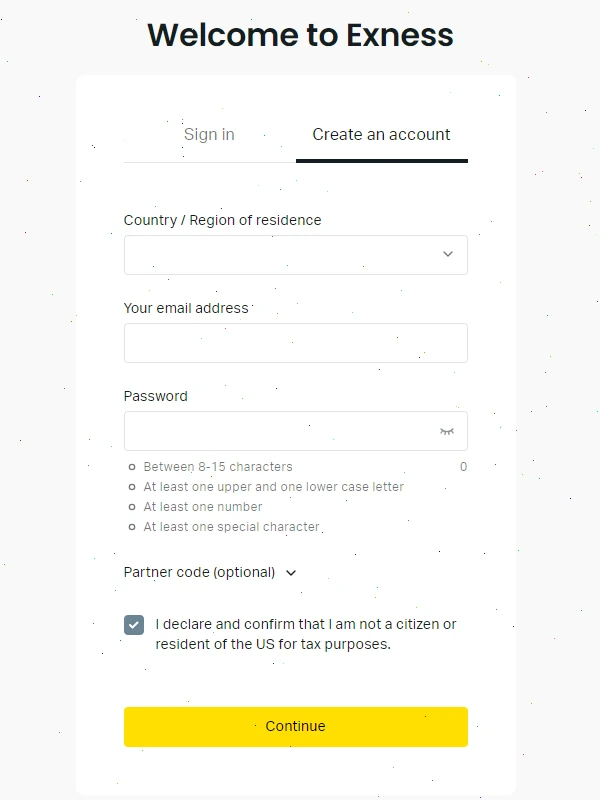
Getting Started: Opening a Demo Account
What You Need
Opening a demo account in Tanzania is straightforward. You only need:
- Email address
- Phone number with +255 code
- Basic personal details
Unlike live accounts, there’s no identity verification at this stage. The process usually takes just a few minutes, and access is granted immediately after confirming your email.
Account Setup Flow
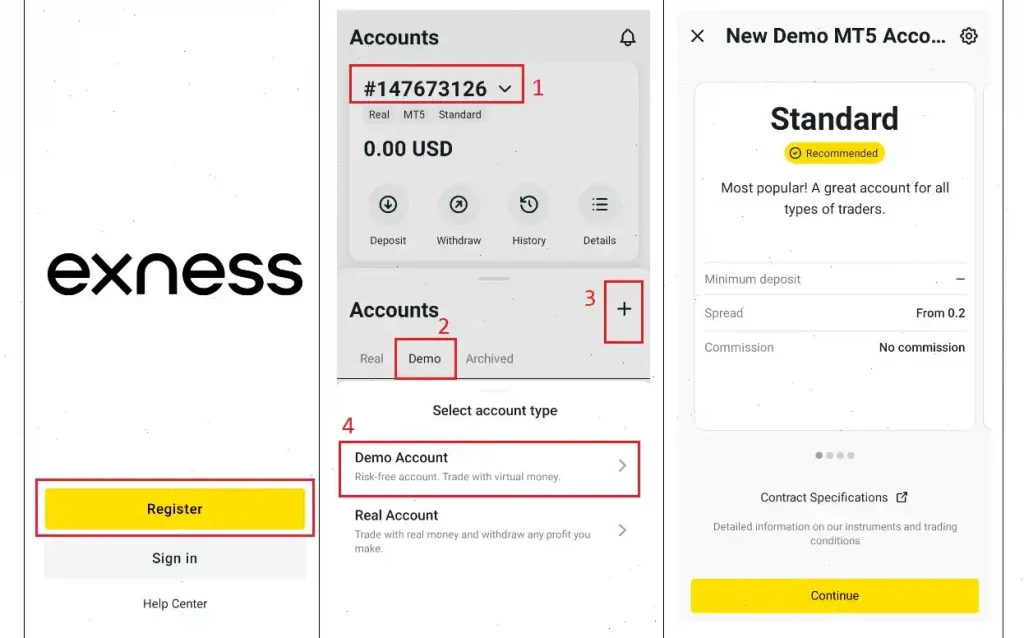
After registration, you’ll choose your platform and configure the account. Most traders pick either MetaTrader 4 or MetaTrader 5, depending on whether they prefer simplicity or more advanced tools.
You’ll also set:
- Starting balance (for example $10,000)
- Leverage (from 1:1 up to 1:2000)
- Account type (Standard, Pro, Raw Spread)
Leverage is worth paying attention to. While high ratios like 1:2000 look attractive, in real trading they can increase both profits and losses very quickly.
What You Can Actually Do in Demo Mode
The demo version isn’t limited — you can place trades, test strategies, and analyze charts just like in a live account. This includes market orders, pending orders, and risk management tools like stop-loss and take-profit.
Charts and Analysis
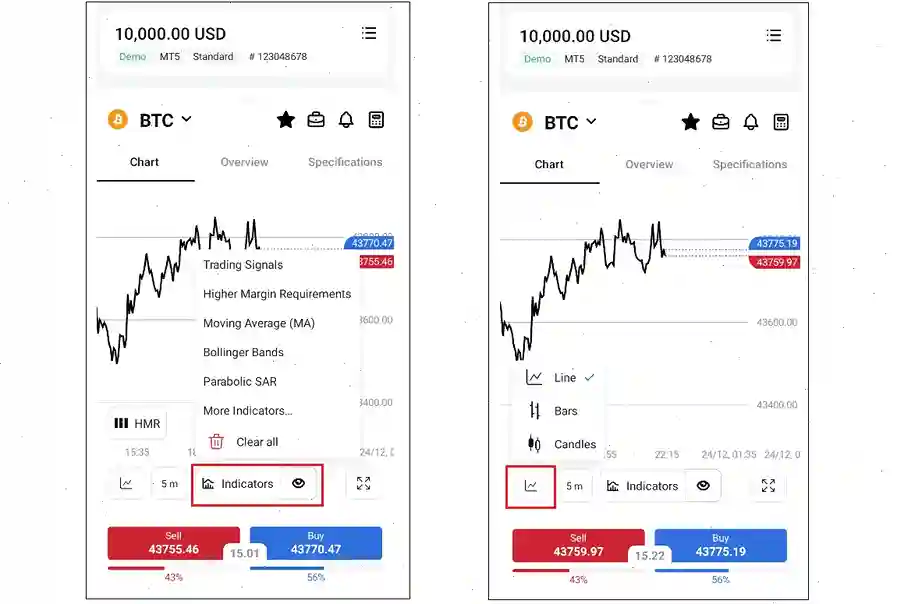
Charts can be switched between candlesticks, bars, and lines, with timeframes ranging from one minute to monthly. There are over 50 built-in indicators — moving averages, RSI, MACD — which many traders use to identify trends or reversals.
In practice, traders often combine just a few indicators rather than using everything at once. Overloading charts can make decisions harder, not easier.
Order Execution
You can experiment with different order types:
- Instant and market execution
- Pending orders (buy/sell limits and stops)
- Trailing stops for dynamic risk control
Execution is typically fast, but it’s still a simulation. In real trading, slippage or delays can happen, especially during high volatility.
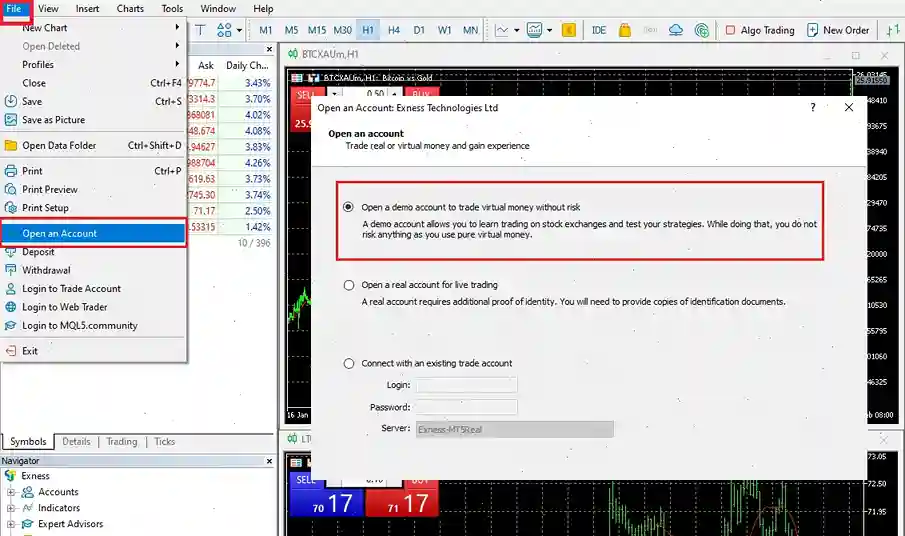
Available Markets and Trading Conditions
| Asset Type | Approx. Quantity | Typical Spread | Leverage Range |
|---|---|---|---|
| Forex | 100+ | From 0.3 pips | Up to 1:2000 |
| Metals | Gold, Silver, others | From $0.15 | Up to 1:2000 |
| Energies | Oil, Gas | From 3 points | Up to 1:200 |
| Indices | Global markets | From 0.4 points | Up to 1:200 |
| Crypto | 30+ | Variable | Up to 1:400 |
Forex pairs like EUR/USD usually have tighter spreads, which makes them popular for short-term strategies. Meanwhile, cryptocurrencies tend to have wider spreads and higher volatility — something that becomes obvious even in demo trading.
Trading Sessions (EAT Time)
Markets operate almost continuously during the week:
- Asian session: quieter, lower volatility
- European session: more active
- US session: often the most volatile
Many traders in Tanzania prefer trading during the London–New York overlap, when price movements are more noticeable.
Learning and Strategy Testing
A demo account is often used to test strategies before risking real funds. Common approaches include:
- Short-term scalping
- Day trading
- Swing trading
Some traders try automated systems (Expert Advisors), while others stick to manual analysis. Backtesting tools help check how a strategy might have performed historically, though past results don’t guarantee future outcomes.
Risk management is another area worth practicing. For example, risking 1–2% of the account per trade is a common approach. On a demo account, it may feel insignificant, but in live trading it directly affects your balance.
Moving from Demo to Live Trading
| Aspect | Demo | Live Account |
|---|---|---|
| Deposit | Not required | From $10 |
| Verification | Email only | ID + proof of address |
| Withdrawals | No | Available |
| Emotional Pressure | Low | Higher |
Switching to live trading changes the experience quite a bit. Even small losses feel different when real money is involved. Many traders in Tanzania spend a few months practicing before making that step.
Verification and Funding
To activate a live account, you’ll need:
- Government-issued ID
- Proof of residence
Funding methods commonly used locally include mobile money services like M-Pesa, along with bank transfers and e-wallets. Processing times vary, but deposits are often faster than withdrawals.
Support and Technical Side
Support is available during the trading week via chat and email. Response times are usually quick, especially for basic issues like login or platform setup.
Platforms and Devices
Trading platforms work on:
- Android and iOS smartphones (popular in Tanzania)
- Windows and macOS desktops
- Browser-based web terminals
In practice, many traders rely on mobile apps for monitoring positions, while using desktop platforms for deeper analysis.
Common Issues
Occasionally, traders run into connection problems or delays. These are often linked to internet stability rather than the platform itself. Restarting the app or switching networks usually helps.
Advanced Features Worth Testing
| Feature | How It’s Used |
|---|---|
| Automated Trading | Run Expert Advisors |
| Backtesting | Check past performance |
| VPS | Keep strategies running 24/7 |
| Custom Indicators | Create personal tools |
| Multi-screen Setup | Analyze multiple charts |
These tools are often overlooked at the beginning, but they can make a difference over time. For example, using a VPS can help avoid interruptions if your internet connection is unstable — something that still happens in certain areas.
❓ FAQ
How long can I use a demo account?
There’s no strict time limit. You can keep using it as long as needed to practice or test ideas.
Is demo trading realistic?
It reflects real market prices and conditions, but lacks emotional pressure and real execution risks.
Which platform should I choose?
MetaTrader 4 is simpler, while MetaTrader 5 offers more tools and asset types.
What leverage should I use?
Lower leverage is generally safer for beginners. High leverage increases risk significantly.
When should I switch to live trading?
Usually after consistent results on demo and a clear understanding of risk management.