
Why Gold is Called XAU in Trading Markets
Learn why gold trading uses XAU symbol on Exness platform. Discover precious metals trading terminology and start gold CFD trading in Tanzania today.
 Understand gold market terminology:
- Trade gold with Exness account
- Gold spread and pricing explained
- CFD gold trading strategies
- Risk management techniques
- Forex vs CFD comparison
Why Gold Is Traded as XAU
Gold doesn’t use a typical currency code like USD or EUR. Instead, it appears as XAU, a format that often raises questions among newer traders.
The logic comes from the ISO system: the letter “X” is used for assets that don’t belong to any country. The remaining part, “AU,” comes from the Latin word aurum, meaning gold. Put together, XAU simply identifies gold in a standardized way across global markets.
On trading platforms, including Exness, gold is most often paired with the US dollar as XAU/USD. This means you’re not buying physical gold — you’re trading its price relative to the dollar. In practice, this makes it easier to compare gold movements with other financial instruments.
| Symbol | Asset | Meaning | Typical Pair |
|---|---|---|---|
| XAU | Gold | From “aurum” | XAU/USD |
| XAG | Silver | From “argentum” | XAG/USD |
| XPT | Platinum | From “platina” | XPT/USD |
In everyday trading, you’ll see this symbol everywhere — from charts to order tickets. Once you get used to it, it becomes second nature.
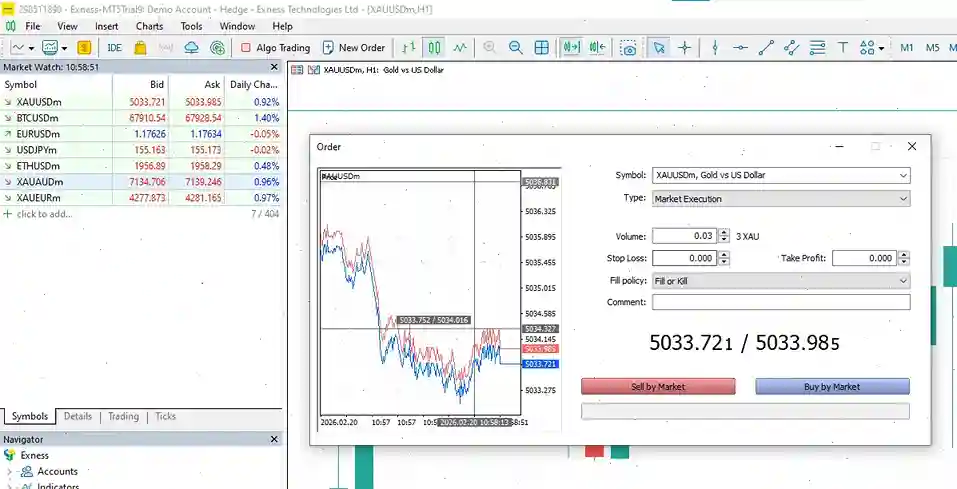
How the ISO Code System Fits Into Trading
Behind the scenes, financial markets rely on the ISO 4217 standard to keep everything consistent. Without it, the same asset might appear under different names depending on the platform — which would quickly become confusing.
Gold, silver, and similar assets fall into a separate category. Since they aren’t tied to any economy, they use the “X” prefix. This is why gold isn’t labeled “GLD” or anything similar.
Why This Matters in Practice
When switching between platforms like MetaTrader 4, MetaTrader 5, or a web terminal, the symbol XAU/USD remains the same. That consistency matters — especially if you track prices across multiple sources.
For traders in Tanzania, it also means that pricing stays aligned with global markets. There’s no local variation in symbol naming, so analysis from international sources still applies.
Simple Structure, Fast Recognition
The three-letter format isn’t random:
- X → non-national asset
- AU → gold identifier
This structure speeds up decision-making. When markets move quickly, recognizing an instrument instantly can make a difference.
How Gold Trading Works on Exness
Gold trading here is done through CFDs. In simple terms, you’re speculating on price movements rather than owning the metal itself.
Spreads on XAU/USD can start from around 0.3 pips during active sessions. That’s relatively tight, but in reality, they tend to widen slightly during news releases or low-liquidity hours.
Leverage is available up to 1:2000. While that sounds attractive, many traders in practice use far less — high leverage increases both potential profit and risk.
Key Contract Details
Each position is tied to a standard structure:
- 1 lot = 100 troy ounces of gold
- Minimum trade = 0.01 lots (1 ounce)
- Maximum volume depends on account and margin
For someone starting out, trading 0.01–0.05 lots is more common. It keeps exposure manageable while learning how gold behaves.
Orders can be placed instantly or set in advance using pending orders. Price updates are real-time, which matters because gold can move quickly — especially during US economic announcements.
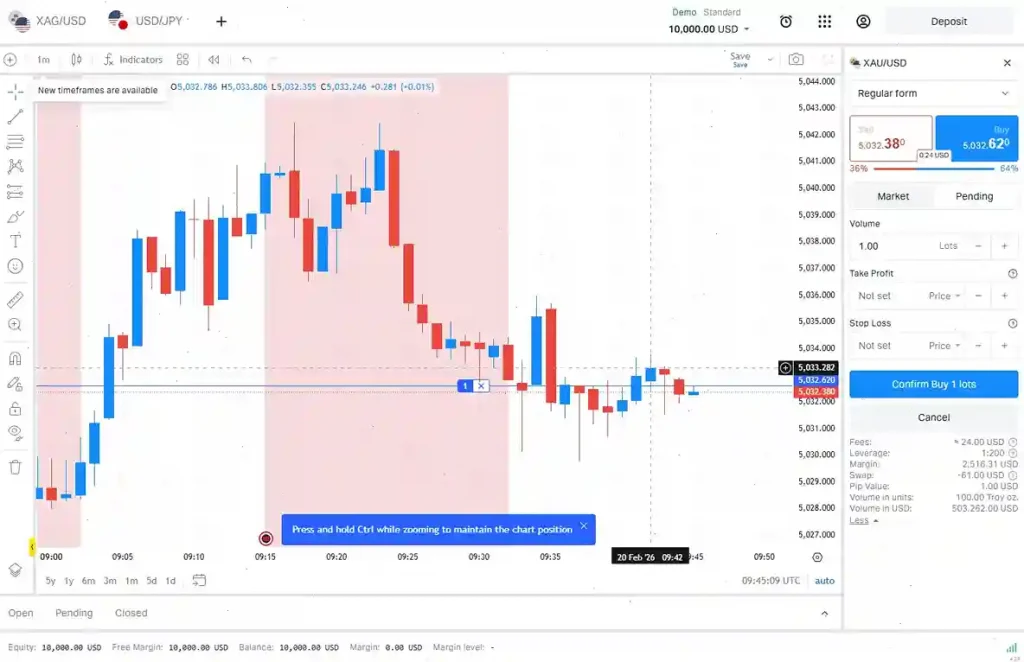
Reading Gold Charts: Tools That Actually Help
Most platforms include dozens of indicators, but in reality, traders tend to rely on a smaller set.
On MetaTrader, you’ll find over 30 built-in tools. The ones that come up most often with gold are fairly straightforward.
Commonly Used Indicators
- Moving averages — help identify trend direction
- RSI — shows overbought or oversold conditions
- MACD — highlights momentum shifts
What’s interesting about gold is that it reacts well to longer timeframes. Many traders prefer 4-hour or daily charts because they reduce noise.
| Indicator | Use | Typical Timeframe | Notes |
|---|---|---|---|
| RSI | Momentum | H4 / Daily | Good for spotting reversals |
| MACD | Trend shifts | Daily | Slower but reliable |
| Moving Average | Trend | All | Often used in pairs (50/200) |
In practice, combining just two indicators is often enough. Adding too many can make signals harder to interpret rather than clearer.
What Moves Gold Prices Day to Day
Gold doesn’t move randomly. Most of the time, there’s a reason — even if it’s not immediately obvious.
A few factors tend to repeat:
Inflation and Interest Rates
When inflation rises, gold often attracts attention as a store of value. However, interest rate hikes can push it in the opposite direction, since higher rates strengthen the dollar.
Dollar Strength
Gold and the US dollar usually move in opposite directions. If the dollar weakens, gold often climbs. You’ll notice this especially during major US data releases.
Market Uncertainty
Political tension or economic instability can increase demand for gold. It’s commonly treated as a “safe-haven” asset, though that doesn’t guarantee price increases.
Many traders keep an eye on economic calendars. Events like Federal Reserve announcements can trigger sharp movements within minutes.
Managing Risk When Trading Gold
Gold can be unpredictable. Even experienced traders sometimes get caught by sudden spikes.
A common approach is to limit each trade to around 2–3% of account balance. It sounds conservative, but it helps avoid large drawdowns.
Basic Tools That Make a Difference
- Stop loss — caps potential loss
- Take profit — locks in gains
- Trailing stop — follows price movement
- Margin monitoring — avoids forced closure
In practice, placing stop losses near support or resistance levels tends to work better than using fixed distances. It aligns risk with actual market structure.
Also worth noting: high leverage can amplify losses quickly. Many traders reduce leverage during major news events to stay on the safer side.
When Gold Is Most Active
Gold trades almost around the clock during weekdays, but activity levels vary.
The London session usually brings the highest liquidity. Spreads tend to tighten, and price moves become more consistent.
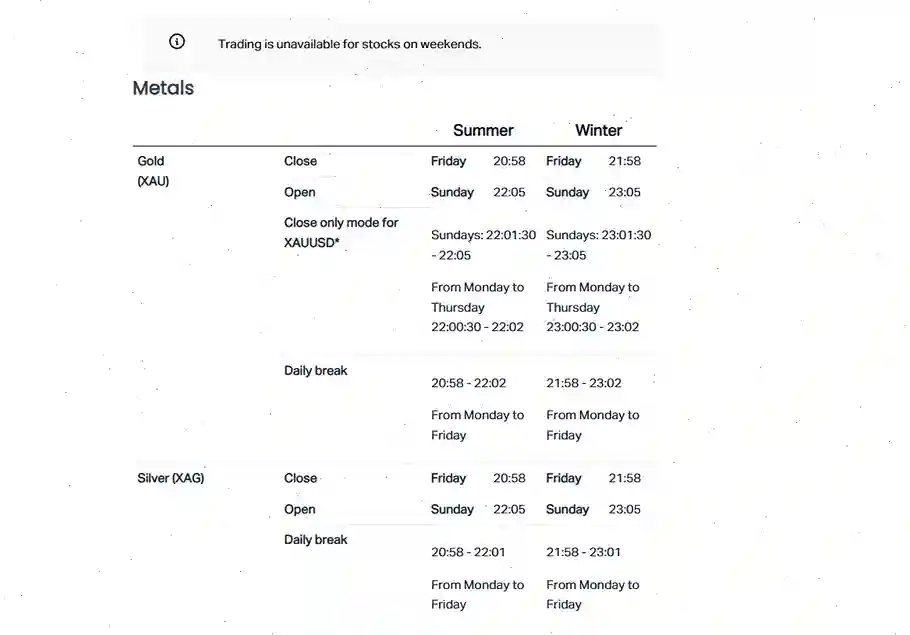
Session Breakdown
| Session | Time (GMT) | Typical Behavior | Spread |
|---|---|---|---|
| Asian | 23:00–08:00 | Slower movement | Wider |
| London | 08:00–17:00 | High activity | Tighter |
| New York | 13:00–22:00 | Volatile | Moderate |
The overlap between London and New York often brings the strongest moves. That’s when both European and US traders are active at the same time.
Getting Started in Tanzania
Opening an account is fairly straightforward. Verification usually requires an ID and proof of address, and in many cases it’s completed within a day.
The minimum deposit starts from around $10 on standard accounts. For many traders in Tanzania, mobile payments are the most convenient option.
Local Usage привычки
- M-Pesa and Tigo Pesa are commonly used for deposits
- Mobile trading is widespread due to smartphone access
- Many traders monitor markets during evening hours
| Feature | Details |
|---|---|
| Minimum Deposit | $10 |
| Payment Options | M-Pesa, Tigo Pesa |
| Verification | Usually within 24h |
| Platforms | Android, iOS, Desktop |
| Support | 24/7, Swahili available |
Most traders start small and gradually increase position size as they get comfortable with price behavior. That approach tends to work better than jumping in with large trades early on.
 FAQ
FAQ
What does XAU stand for?
It’s the international code for gold. The “X” shows it’s not tied to a country, and “AU” comes from the Latin word for gold.
Do I actually buy gold when trading XAU/USD?
No. You’re trading price movements through CFDs, not owning physical gold.
Is high leverage necessary for gold trading?
Not really. While high leverage is available, many traders prefer lower levels to reduce risk.
When is gold most active?
Usually during the London and New York sessions, especially when they overlap.
What’s a common beginner mistake?
Trading too large positions too early. Starting small helps manage risk while learning how the market behaves.